


TL;DR — Building a personal brand online is four decisions, in order: what you are known for, where you post, what you publish on a repeatable schedule, and where you send people who want more. The 30/60/90-day plan below sequences them so you are not doing all four badly at once.
Reviewed 21 August 2026 by the Linkie team.
A coach posts sharp advice on Instagram. A consultant records useful TikToks. A musician uploads clips to YouTube Shorts. A founder shares thoughtful LinkedIn posts. The work is solid, but the result is silence. A few likes. No real conversations. No subscribers. No clear path from attention to income.
That pattern is common because individuals rarely fail on content quality first. They fail on structure. Their message is fuzzy, their profiles don't match, their channels compete with each other, and the traffic they do earn has nowhere sensible to go. They're building visibility without building a system.
That's a serious problem in a market that keeps rewarding independent authority. The creator economy reached a market value of approximately $425 billion in 2024 and is projected to exceed $1 trillion by 2027, which shows how personal branding has become a core asset for monetization, not a side project (creator economy market projection).
A practical roadmap fixes that. It gives creators, marketers, agencies, startups, musicians, coaches, and small businesses a way to decide what they stand for, where they should show up, what they should publish, and how they'll turn attention into subscribers, leads, and customers.
How to Build a Personal Brand Online in 2026
A typical personal brand starts with enthusiasm and then drifts into clutter. One week goes to Instagram Reels. The next week goes to TikTok. Then a long LinkedIn post appears, followed by a YouTube idea that never gets edited. Nothing connects, and the audience feels that disconnect immediately.
Frustration isn't low reach. It's low traction. Plenty of people can publish content. Far fewer can build a recognizable identity that makes the right people remember them, trust them, and take action.
That's why learning how to build a personal brand online has less to do with chasing visibility and more to do with making better decisions in order. A strong brand starts with foundations, moves into focused platform selection, then grows through a repeatable content system and a conversion path that doesn't waste hard-won traffic.
Practical rule: If a profile gets attention but can't turn attention into a next step, it's a media habit, not a brand system.
The rest of the roadmap follows that logic. Define the message. Pick the right channels. Build content around clear themes. Create growth loops through search, social, and partnerships. Then execute a focused 30/60/90-day rollout.
Personal Brand Foundations: Positioning and Audience
Most weak personal brands share the same problem. They start with content before they define position. That's backwards.
Start with the business outcome
Before choosing fonts, hooks, or filming styles, a creator needs one clear answer to a basic question. What should this brand do?
Often, the answer falls into one primary bucket:
Lead generation: Coaches, consultants, agencies, and service businesses usually need discovery calls, inquiries, or booked conversations.
Audience ownership: Creators and educators often need newsletter subscribers and repeat traffic they control.
Sales: Musicians, e-commerce founders, and digital product businesses need product clicks, purchases, and repeat buyers.
Authority: Startups and operators may need speaking invites, press mentions, podcast requests, or stronger professional visibility.
Without a primary outcome, content gets vague fast. A growth post, a personal story, and a product promo can all work. But they only work when they support one central goal.
Define the audience tightly
“People who need help” is not an audience. It's a shortcut to bland messaging.
Useful audience definitions are specific enough to guide language, examples, and offers. A better audience profile usually includes:
Element | Better question |
|---|---|
Role | Who is this person professionally or creatively? |
Pain point | What problem are they actively trying to solve? |
Motivation | What result are they chasing right now? |
Content preference | Do they respond better to video, written breakdowns, or short tips? |
Buying trigger | What makes them finally take action? |
A fitness coach might serve busy professionals who want simple meal structure. A social media manager might serve local businesses that can't post consistently. A musician might focus on fans who want behind-the-scenes access, live updates, and exclusive releases.
Write a usable positioning statement
A good positioning statement doesn't sound clever. It sounds clear.
A simple formula works well:
[Who you help] achieve [result] through [method or point of view].
Examples:
A coach who helps first-time founders communicate with more clarity through content and storytelling.
A UGC creator who helps e-commerce brands turn product features into short-form video people engage with.
A musician who blends performance clips, songwriting commentary, and fan-first releases into a consistent digital identity.
A brand becomes easier to trust when people can explain it to someone else in one sentence.
Build a one-page brand brief
Every serious personal brand should have a lightweight internal document. One page is enough.
Include:
Core message
Audience summary
Three to five content themes
Visual direction
Preferred tone
Primary call to action
The visual side matters more than people admit. Use the same profile photo everywhere. Keep color choices simple. Pick one or two type styles. If the brand looks different on Instagram, TikTok, YouTube, and LinkedIn, trust drops because recognition drops.
Choosing Platforms and Setting Up Your Link In Bio
Creators lose momentum when they spread effort too early. That mistake looks productive, but it usually kills consistency.
The most common pitfall in personal branding is platform dispersion, with a 99% failure rate when experts spread efforts across too many channels instead of focusing on one highly effective platform first (platform focus insight).
Pick one primary platform first
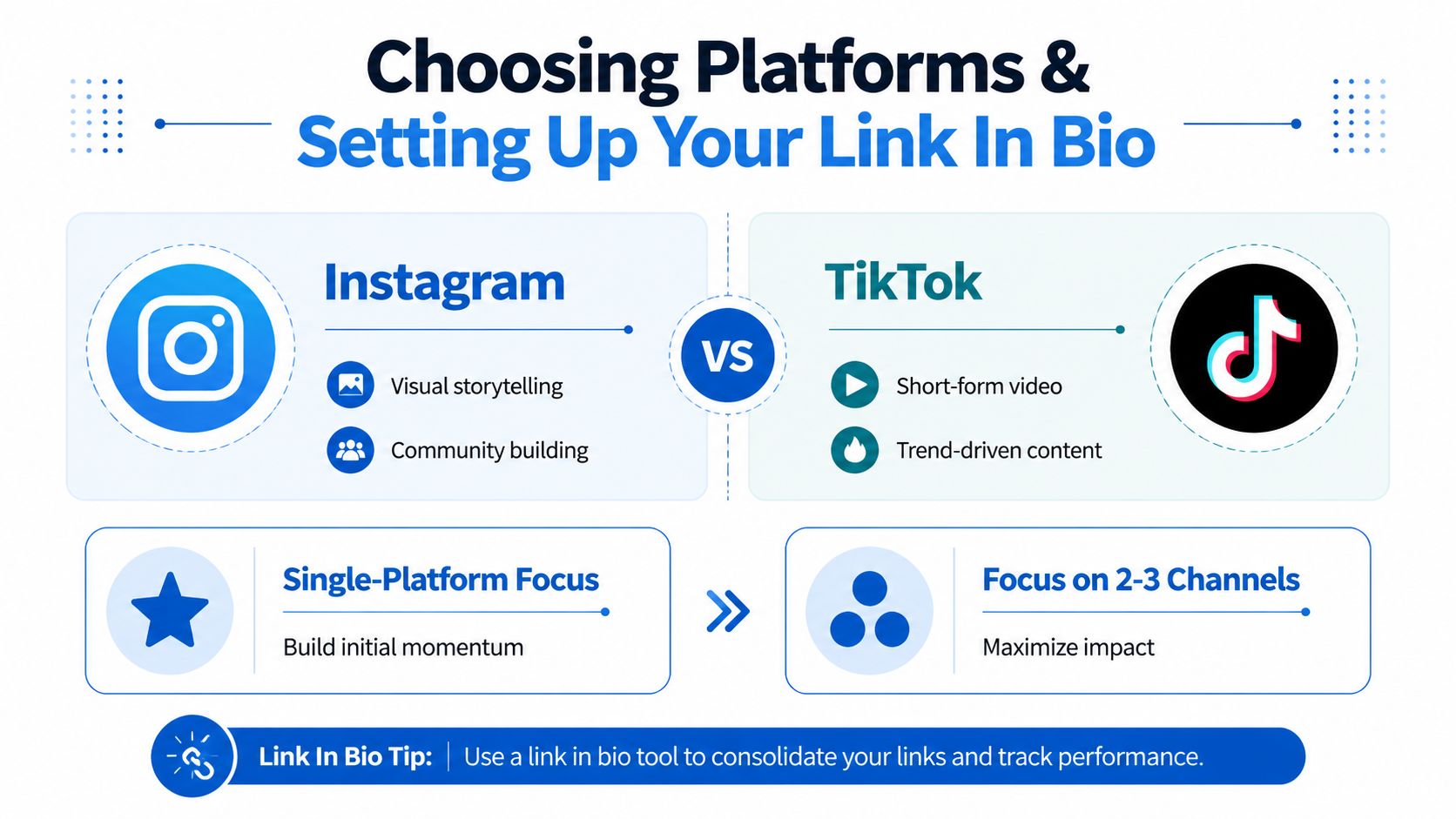
The smartest move is to choose one main channel based on audience behavior and content fit, then support it with one or two secondary platforms later.
A quick decision guide helps:
Platform | Best for | Weakness |
|---|---|---|
Visual storytelling, community, lifestyle, creator brands | Hard to build owned audience without a clear bio funnel | |
TikTok | Discovery, short-form reach, trend-adjacent education or entertainment | Fast content decay and weaker brand depth if messaging is inconsistent |
YouTube | Searchable authority, tutorials, long-term content value | Heavier production effort |
B2B authority, founder branding, consultants, operators | Lower tolerance for vague lifestyle content |
A coach selling services might start with LinkedIn or Instagram. A musician likely gets faster traction from TikTok and Instagram. A startup founder building authority may get the strongest early signal from LinkedIn and YouTube.
The point isn't to be everywhere. It's to get known somewhere.
The visual below maps the production side of that decision.
Build one destination for all traffic
Once traffic starts coming in, a scattered link setup creates friction. One profile sends people to a website. Another sends them to a storefront. Another uses a generic multi-link page with no clear priority. That setup makes conversion harder than it should be.
A better bio page should do three things well:
Direct attention: Put the highest-priority action first.
Reduce confusion: Limit unnecessary choices.
Capture intent: Give visitors a reason to subscribe, inquire, or buy.
Many creators compare different link in bio apps and realize the core challenge isn't just adding more links. Rather, it's building a destination that feels like a branded landing page, not a list of buttons.
Later in the workflow, video can reinforce that same destination and message.
Keep the bio page conversion-ready
A useful setup usually includes:
A clear headline: State who the brand helps or what it offers.
One primary CTA: Newsletter, booking link, store, or latest release.
Social proof elements: Featured press, notable clients, strong content, or best work.
Email capture: Especially important for creators who don't want to depend on platform algorithms.
Analytics: Without analytics, it's impossible to know which cards or offers are effective.
A bio page should behave like a business asset. If it can't explain the offer and measure what visitors click, it's decoration.
Crafting Your Content Strategy and Production Workflow
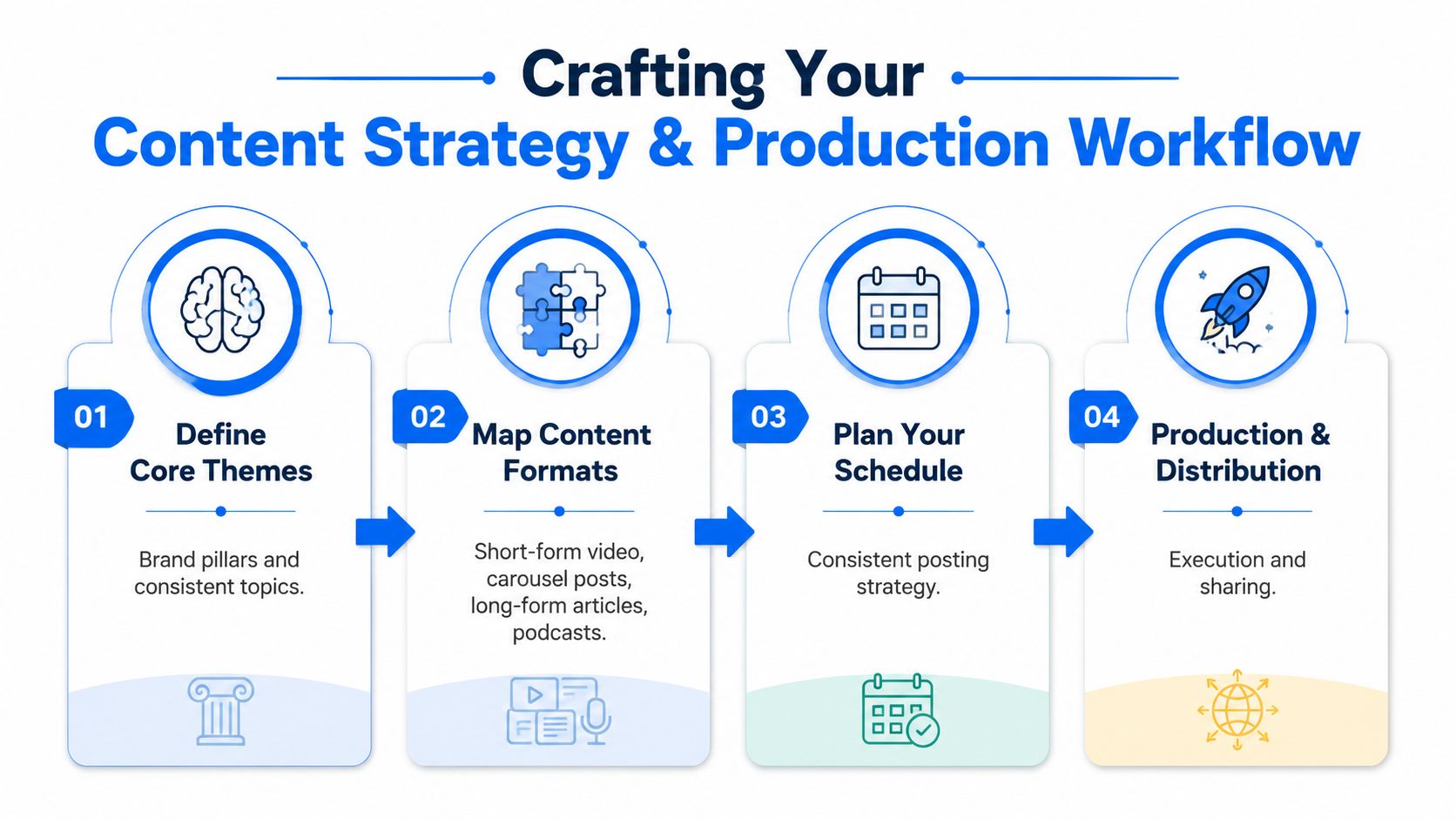
A personal brand doesn't grow from random bursts of motivation. It grows from a content system that's boring enough to repeat and strong enough to compound.
Build around content themes
Most creators don't need more ideas. They need fewer categories.
Three to five content pillars usually create enough structure without making the brand repetitive. A practical setup might look like this:
Expertise content: Tutorials, breakdowns, myths, frameworks
Point-of-view content: Opinions, trade-offs, commentary
Proof content: Results, behind-the-scenes work, process clips
Personal context: Story, lessons learned, daily realities
Offer content: Products, services, booking prompts, launches
A coach might rotate between mindset reframes, client education, personal routines, and service offers. A small business might focus on product demos, customer questions, founder perspective, and behind-the-scenes production.
The strongest systems make every post fit one pillar. That's what keeps a brand coherent.
Match formats to the idea
Not every idea belongs in every format. That's where production gets easier.
For video content, the most effective format for short-form platforms is a 30 to 60-second vertical clip shared identically across TikTok, Instagram Reels, Facebook Reels, and YouTube Shorts to maximize distribution (short-form video format guidance).
That doesn't mean every idea should become a video. It means good video ideas should be reused intelligently.
A simple format map works well:
Content type | Best use |
|---|---|
Short-form video | Quick tips, stories, reactions, proof of work |
Carousel posts | Step-by-step teaching, myths, checklists |
Long-form articles | Deeper authority and searchable insights |
Email newsletters | Owned audience nurturing and direct offers |
Use a lightweight workflow
A one-person brand still needs a workflow. Notion, Trello, and Airtable are all fine if the system stays simple.
A clean weekly process often looks like this:
Collect ideas from client questions, audience comments, and daily work.
Assign each idea to a content pillar and format.
Batch record or draft in one focused block.
Edit and schedule with a realistic cadence.
Review performance based on conversations, clicks, and inquiries.
That workflow also makes repurposing easier. One long-form idea can become a short video, a carousel, a LinkedIn post, and an email intro. Creators looking for practical design patterns can study strong creator landing page examples to see how messaging and content formats reinforce each other.
Editorial note: If the production system depends on daily inspiration, it will break. If it depends on a repeatable workflow, it can scale.
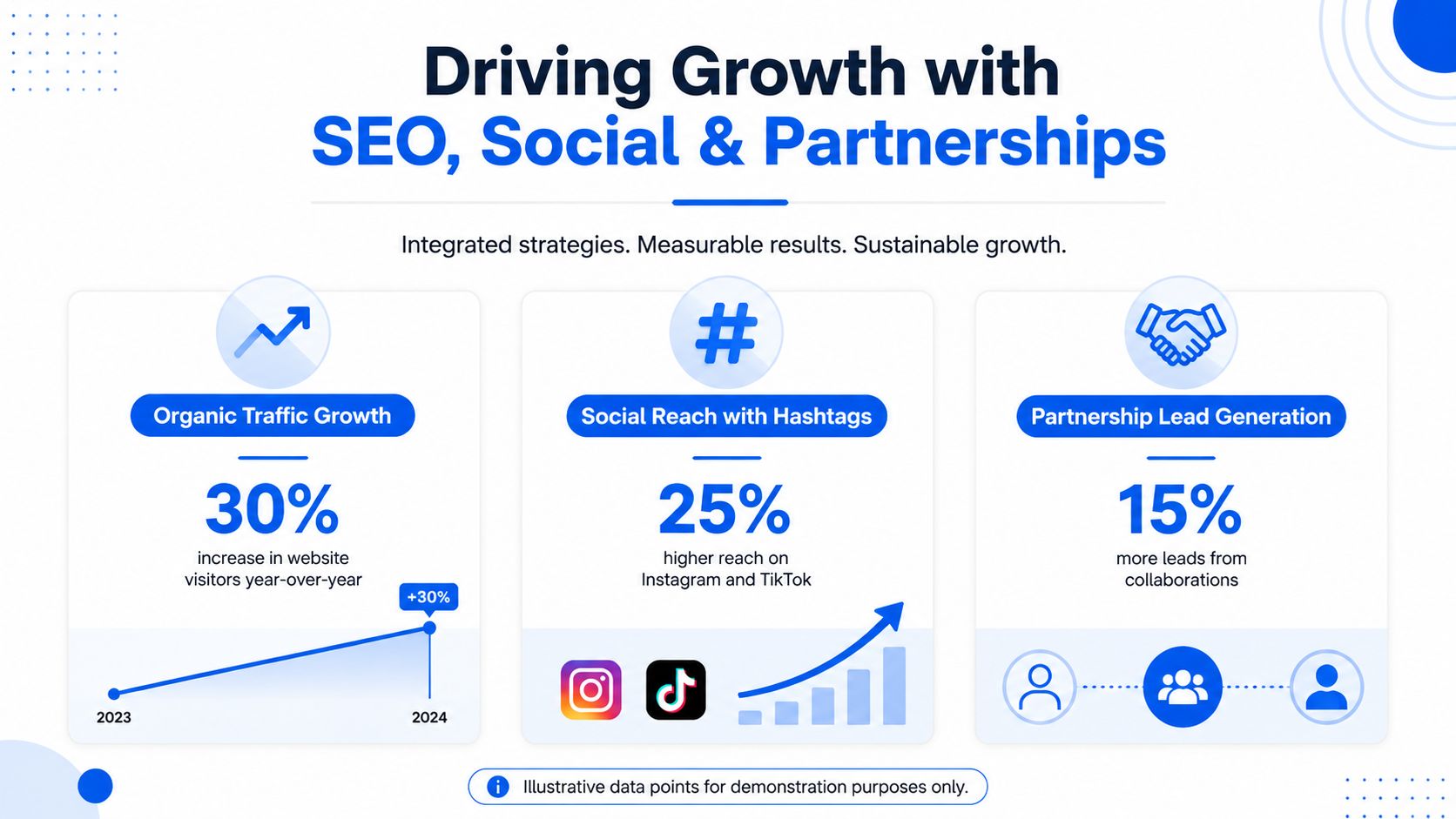
How to Grow a Personal Brand Online: SEO, Social, and Partnerships
Growth usually stalls for one of two reasons. Either the content doesn't get discovered, or it gets discovered and doesn't lead anywhere useful. Strong personal brands solve both.
Use search to build durable discovery
Social distribution creates spikes. Search creates steady visibility.
That matters for personal brands because many high-intent visitors don't discover experts through a viral clip. They discover them through a useful article, a profile page, a comparison post, a podcast appearance, or a well-optimized creator landing page.
For personal brand SEO, the practical basics matter most:
Clear page titles: Use descriptive language tied to the audience and offer.
Consistent naming: Keep the same brand name, headshot, bio language, and positioning across profiles.
Searchable topics: Write or record content around real questions clients and followers ask.
Strong internal structure: Make it obvious where someone should go next after reading or watching.
There's also a newer layer that many creators ignore. Most personal branding content misses how AI is reshaping discovery, with 40% of users now skipping traditional search results entirely and 68% of recruiters and buyers using AI tools first to vet candidates and brands (AI-first brand discovery shift). That makes clarity even more important. Personal brands need consistent bios, repeated expertise signals, and clean language that AI systems can interpret correctly.
Tighten social distribution
Social growth works better when every platform has a job.
Instagram is strong for visual trust and repeat exposure. TikTok is excellent for discovery and testing hooks. YouTube supports deeper authority. LinkedIn works well for B2B consultants, agency owners, startup operators, and coaches who sell expertise.
But distribution needs restraint. Good creators often over-post mediocre ideas just to feel active. That usually weakens the brand.
A better approach is to publish fewer, sharper pieces and support them through active engagement:
Reply quickly: Conversation builds trust faster than extra posting.
Comment in niche circles: Useful comments on peer content often outperform weak standalone posts.
Reuse winners: If a topic sparks real discussion, adapt it into another format.
Keep messaging aligned: Discovery content and conversion content should sound like the same brand.
Research cited in Forbes notes that social updates should ideally stay under 140 characters, while long-form articles should target 1,000 to 2,000 words to balance clarity and authority (content length guidance). Those benchmarks are useful because they force discipline. Short social posts need one point. Longer articles need enough depth to matter.
Partnerships grow trust faster than solo posting
Partnerships are underused because they feel slower than posting. They're often far more effective.
For creators, marketers, agencies, startups, musicians, coaches, and small businesses, strong collaboration options include:
Guest appearances: Podcasts, lives, webinars, joint videos
Expert swaps: Two specialists answer the same audience problem from different angles
Newsletter features: Cross-promotion with adjacent audiences
Co-created resources: Guides, templates, playlists, mini-workshops
The key is fit. A smart partnership doesn't chase the biggest name. It connects with someone who shares an audience but solves a different problem.
The best collaborations don't just expand reach. They transfer credibility.
One practical example is the TikTok-to-landing-page loop. A creator publishes educational TikToks, collaborates with adjacent creators for topic swaps, then sends viewers to a central destination that captures leads or highlights the next action. This is why understanding guides like how to drive traffic from TikTok matters. Reach only matters when there's a path after the click.
Fix the conversion infrastructure
This is the part most personal brand advice handles badly.
Existing guides ignore conversion infrastructure, yet data shows 73% of creators with 10K+ followers fail to collect emails because they lack a centralized landing page with analytics and email capture (creator email capture gap).
That gap explains why some creators look influential but run weak businesses. They have views, but no owned audience. They have followers, but no usable funnel. They have traffic, but no proof of what converts.
A practical conversion setup should include:
Element | Why it matters |
|---|---|
Central landing page | Keeps social traffic focused |
Email capture | Turns borrowed reach into owned audience |
Analytics | Reveals what content drives action |
Clear CTA hierarchy | Prevents choice overload |
Offer alignment | Matches audience intent with the right next step |
At this point, branding becomes commercial in the best sense. Not pushy. Just clear. People shouldn't have to guess what the brand offers or what to do next.
Tips for Building Your Personal Brand Online: a 30/60/90-Day Plan
Most personal brands don't need a reinvention. They need an execution window with deadlines.
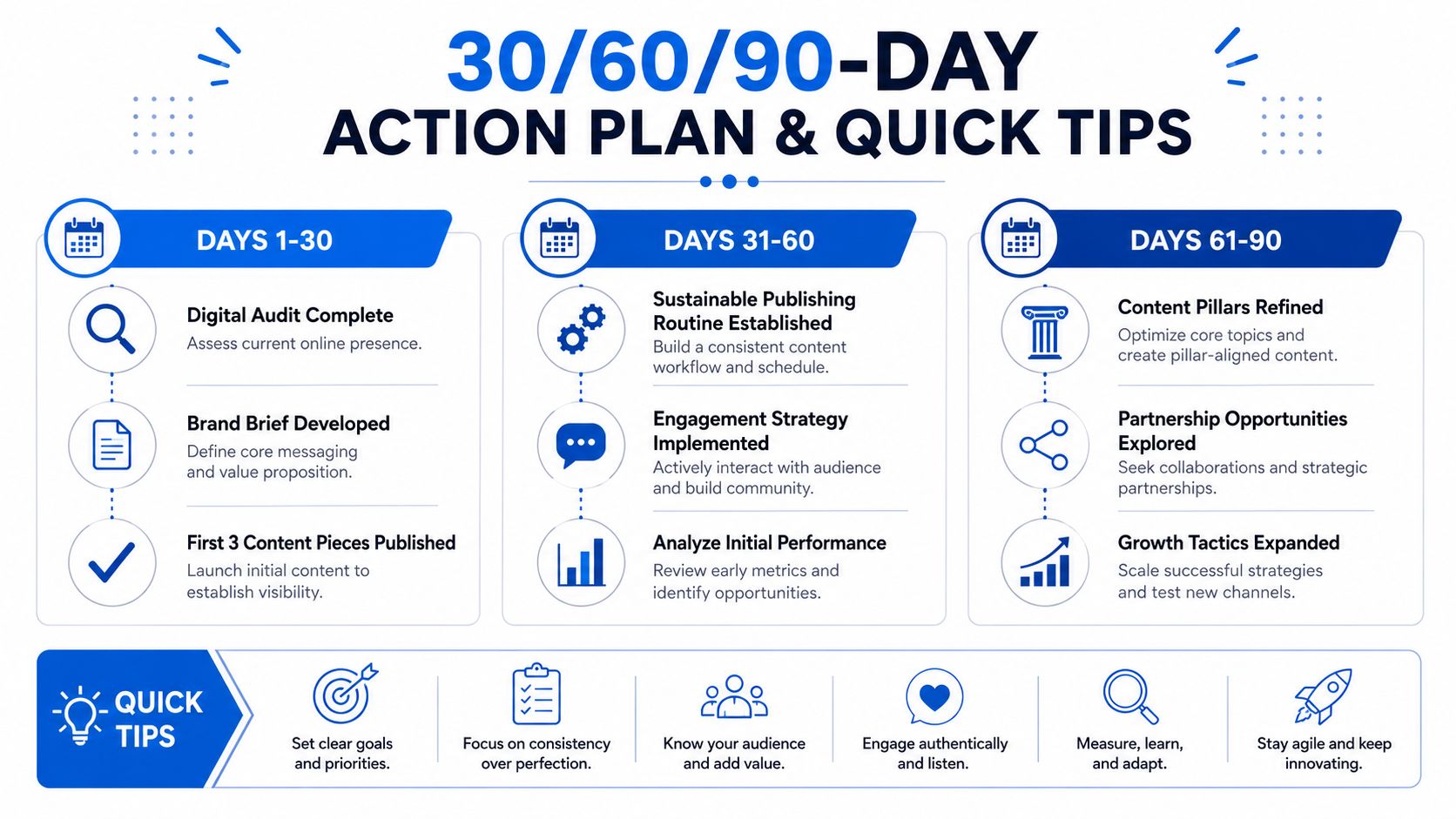
A rigorous 90-day personal brand methodology segments execution into three phases, foundation, consistency, amplification, ensuring systematic scalability rather than ad-hoc posting (90-day personal brand methodology).
Days 1 to 30
Start with cleanup and clarity.
Run a digital audit: Review every public profile, old link, photo, bio, and inactive account.
Write the brand brief: Lock in message, audience, themes, and primary CTA.
Publish three starter pieces: One educational, one personal-context piece, and one proof-oriented post works well.
Days 31 to 60
This phase is about rhythm, not reinvention.
Choose a sustainable cadence: A realistic posting routine beats an ambitious one that collapses after ten days.
Engage with peers: Comments, tags, and thoughtful responses create early momentum.
Track business conversations: Save posts that lead to inquiries, replies, or meaningful DMs.
Quick checkpoint: If the brand is posting regularly but getting no qualified conversations, the issue is usually message clarity, not effort.
Days 61 to 90
Now the focus shifts to amplification.
Double down on strong topics: Repeat ideas that generated real interest.
Launch one strategic partnership: A joint live, interview, or content swap is enough.
Measure lead impact: Check which content influenced conversations, signups, or sales.
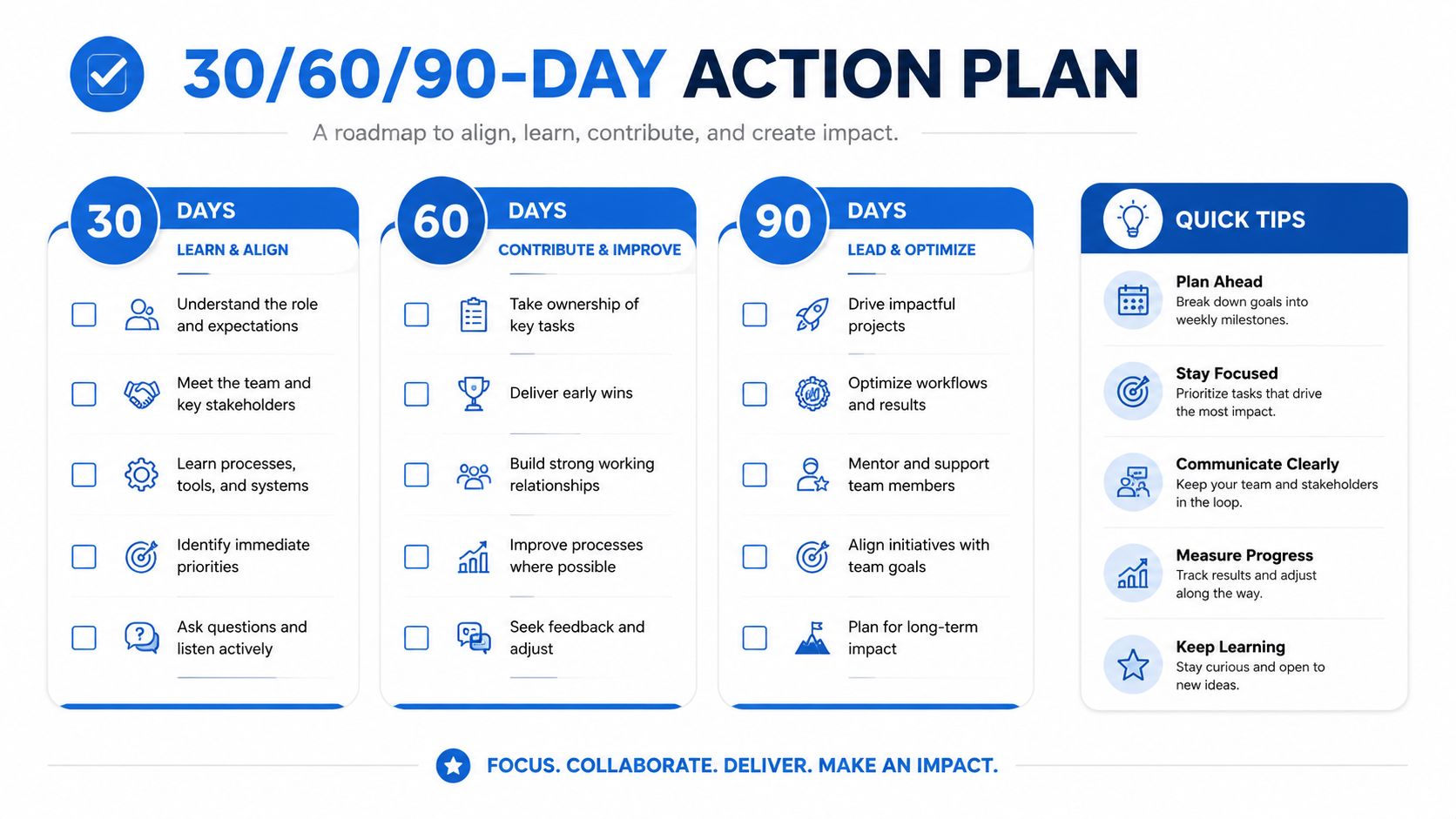
A few quick tips make the plan work better:
Keep visuals consistent: Same profile image, same tone, same positioning.
Don't chase every platform: Focus beats expansion early.
Follow up fast: Warm interest cools quickly when replies are slow.
Measure signals that matter: Conversations and clicks matter more than vanity reactions.
Personal Branding Platforms and Tools
A strong personal brand isn't built by posting everywhere and hoping something sticks. It's built through a sequence of disciplined choices. Clear positioning. Focused platform selection. Repeatable content. Searchable authority. Smart partnerships. A destination that turns attention into action.
That's why the best answer to how to build a personal brand online is also the least glamorous one. Pick a lane. Say something specific. Publish consistently. Track what moves people closer to trust and conversion. Then refine from real feedback instead of guessing.
Creators, coaches, agencies, startups, musicians, and small businesses don't need a huge audience first. They need a clearer system. Once that system is in place, momentum becomes easier to recognize and easier to build on.
The next useful step is simple. Create one central page that gives every profile, post, and campaign a home. Then measure what people do there. That's how attention stops being scattered and starts becoming an asset.
A simple next move is to create a free Linkie page and test how a cleaner bio destination changes clicks, subscribers, and conversions. The free playground makes it easy to start without overcommitting. Try it here: create a free Linkie page.
Building a Personal Brand as a B2B Marketer
B2B changes two things about personal branding and nothing else. First, the audience is smaller and known — a few thousand people in one function, several of whom can actually buy — so reach is close to worthless and being recognised by the right hundred is everything. Second, the content that works is the specifics of your job: what you tried, what it cost, what broke. Generic advice reads as noise to peers who do the same work. Post where those peers already are rather than everywhere, and treat your link in bio as the one place that collects the proof.