

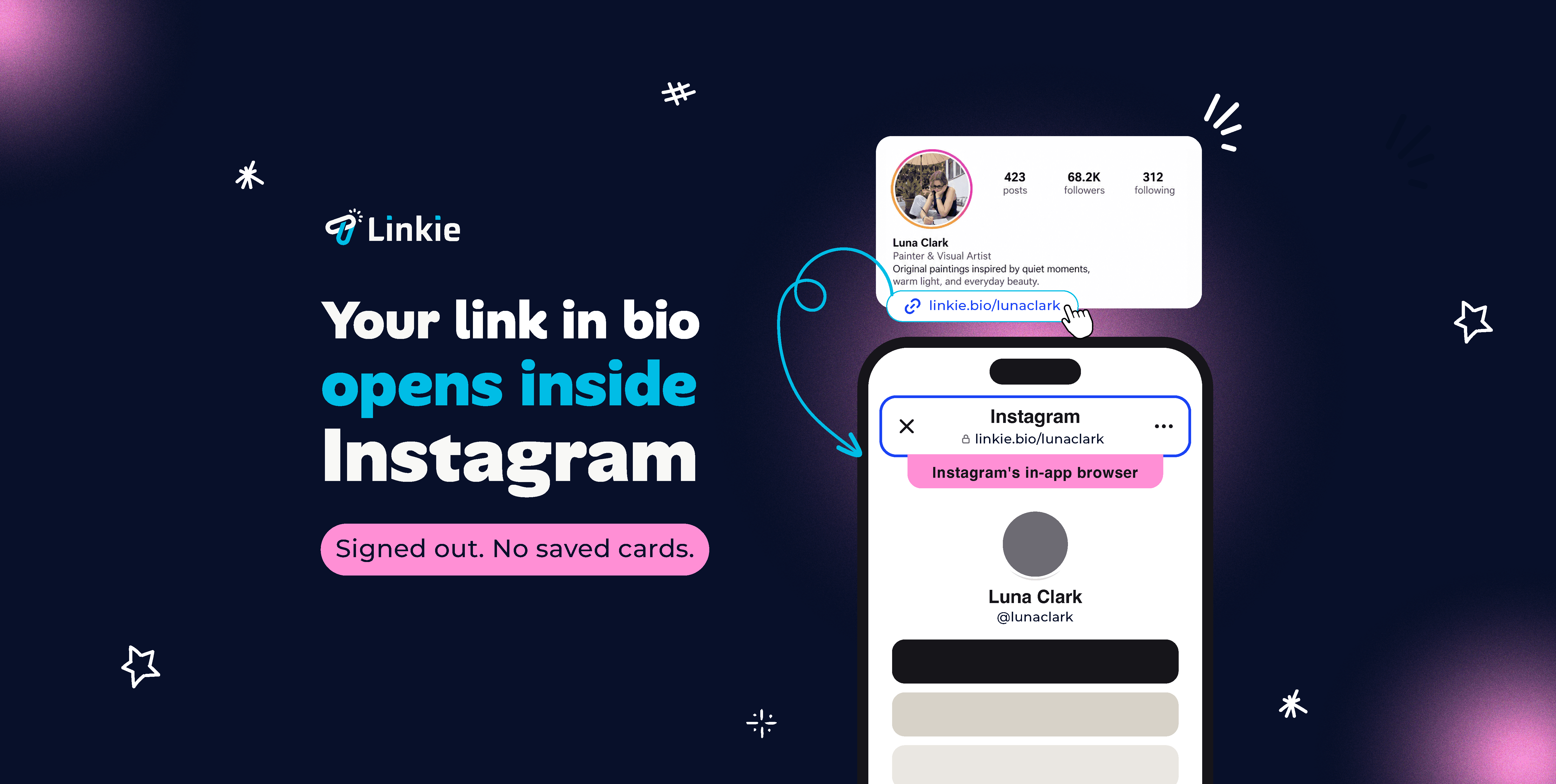
TL;DR: Your link in bio opens inside Instagram's browser, so visitors land signed out of everything. Turn on the default browser option in your Linkie settings and they get offered a way out to Safari or Chrome.
By Denis Qyra, Marketer at Linkie · Last updated 28 September 2026
You shared your link in bio, and the people who tap it end up inside Instagram’s own browser rather than Safari or Chrome. Nothing is broken. That is Instagram working as designed, and the only person who can change it is you, the person who shared the link.
What an in-app browser actually is
An in-app browser is a stripped-down browser built into the app itself. Developers call it a webview. It looks like a browser, and it is not the one your visitor chose, signed into, or saved anything in.
That distinction is invisible to the person tapping. It is not invisible to the things your page depends on.
Your link in bio opens inside Instagram’s browser
Every major social app ships its own built-in browser and opens links there rather than handing them to Safari or Chrome. It keeps people one back-swipe away from the feed, which is the point of it.
The cost lands on whoever shared the link.
What this means for your conversion
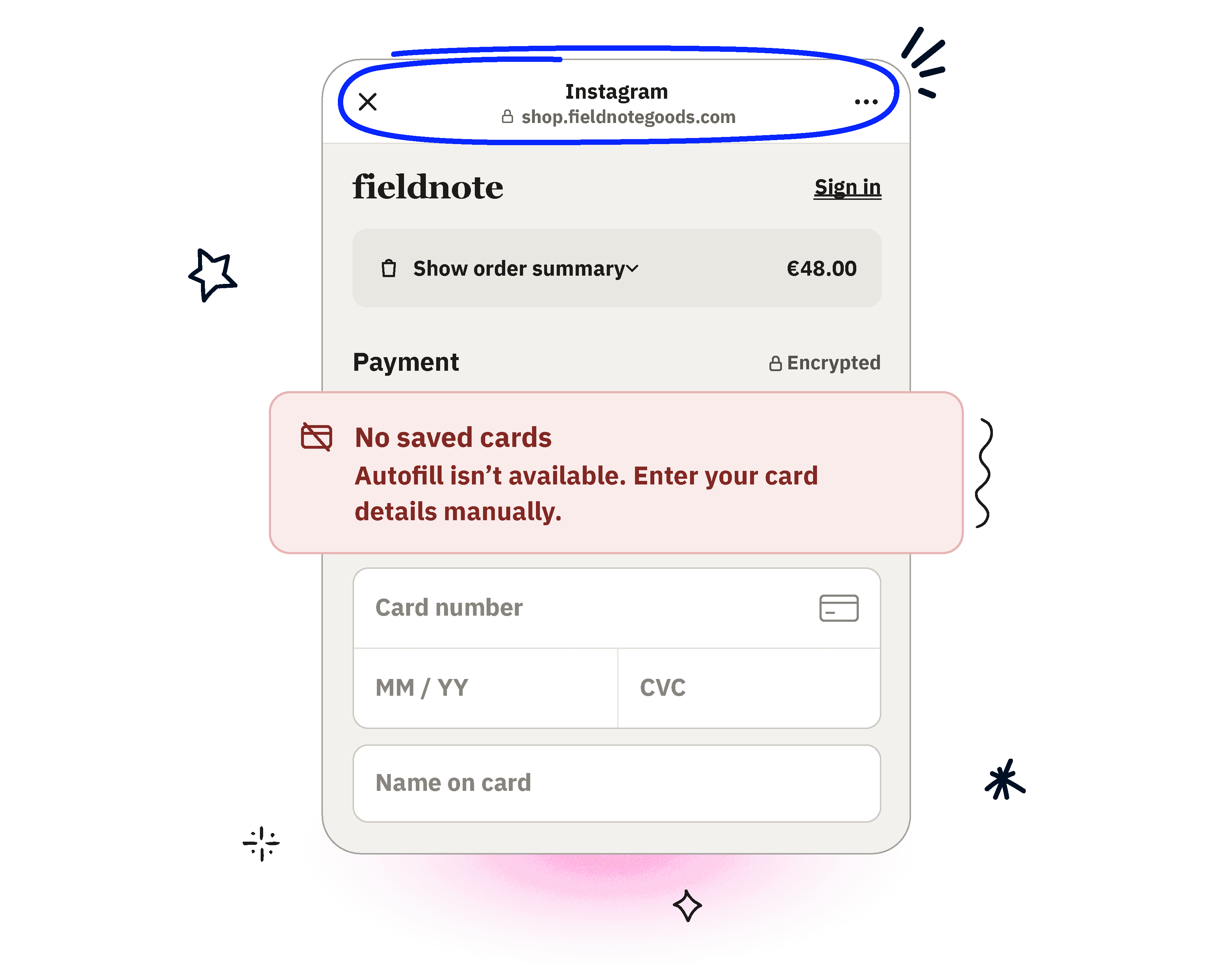
Logins. Sessions do not carry over. People arrive signed out of accounts they never signed out of.
Saved payment details. Autofill and stored cards go missing at exactly the moment someone is trying to buy.
Your tracking. UTM parameters, pixels and analytics fire unpredictably inside an embedded browser. A campaign can look like it underperformed when it was never measured at all.
That last one is the expensive one, because it is invisible. The campaign does not report an error. It reports a worse number.
How a visitor gets out, one at a time
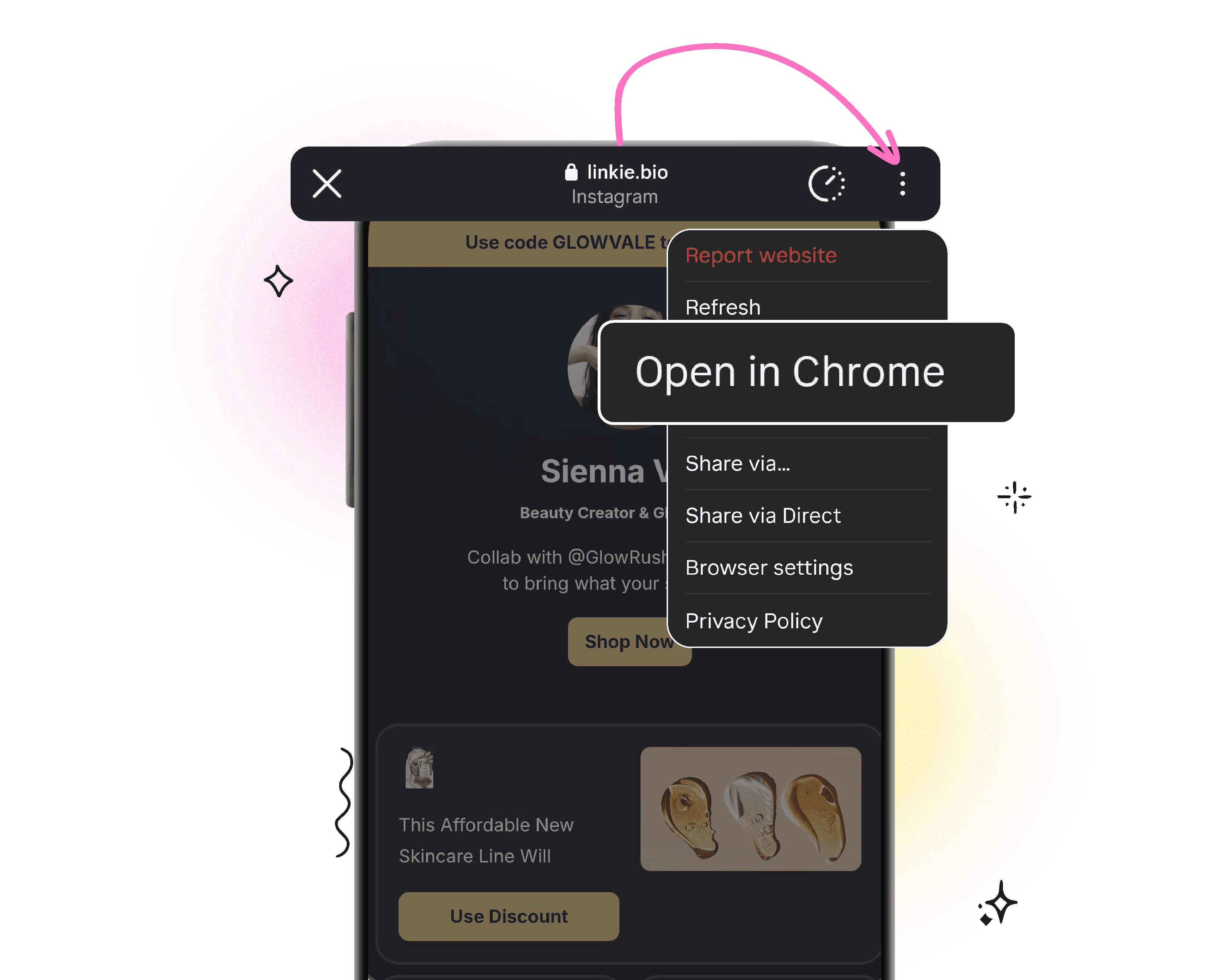
There is a way out, and it has been sitting in the corner of that browser the whole time.
Tap the three-dot ⋯ menu and choose Open in. On iPhone that reads Open in Safari. On Android it is Open in Chrome, or Open in browser. The page reloads in the browser you normally use.
Try it once on your own phone. Most people have used Instagram for years without noticing that menu exists, which is the whole problem: it works perfectly and nobody finds it.
How to bypass Instagram’s in-app browser
You cannot turn off Instagram’s browser for someone else. That setting belongs to each visitor’s app, not to you, but you can offer your visitor a way out to the browser they already use, like Chrome or Safari.
What you can change is your link in bio. Like Smart Links, opening in the default browser is a switch in your Linkie settings: turn it on once and it applies to every link on your page. It offers your visitor the same Open in choice up front, as a prompt, instead of waiting for them to go looking for it. That is how you bypass the in-app browser without asking anyone to hunt through a menu. They tap it or they do not, and the page loads either way.
You can learn more about how it works for each platform in our help center.
Is any of this against Instagram’s rules?
No. Instagram ships an “Open in Safari” option inside its own browser menu. Offering your visitor the same choice earlier is not circumventing anything, and it has nothing to do with logins, private accounts, age restrictions or region restrictions. The visitor sees exactly the page you sent them to.
Common questions
Why is my Instagram link in bio not working?
Your link in bio opens inside Instagram’s built-in browser instead of your visitor’s normal browser. That is default behavior, and only you, the person who shared it, can change it.
How do I get out of Instagram’s in-app browser manually?
Tap the three-dot menu in the corner and choose “Open in”: Open in Safari on iPhone, Open in Chrome or Open in browser on Android. The page reloads in the browser you normally use.
Why does Instagram use its own browser at all?
It keeps people inside the app. A visitor who leaves for Safari has left the feed; a visitor in the in-app browser is one swipe from being back in it.
Does this happen on TikTok and YouTube too?
Yes. Every major social app does it. What differs is whether the app permits a link to hand the visitor over to their own browser. TikTok does not, which is why TikTok link in bio not working is its own problem with its own fix.
Will my link in bio still work if someone stays in the in-app browser?
Yes. The web page loads normally either way. Nobody hits a dead end.
Does my visitor need to install anything?
No, and they do not need an account either. The setup on Linkie happens once, on your end.